Critical cybersecurity standards and frameworks for 2024
Businesses today face increasingly sophisticated cyberattacks that threaten their operational integrity and data. In response to this growing threat landscape, organizations of all sizes are adopting cybersecurity standards and frameworks like ISO 27001 and the NIST CyberSecurity Framework to protect their digital assets and stay compliant with regulators.

.png)
Cybersecurity standards and frameworks for a changing world
Cybersecurity standards and frameworks guide organizations in safeguarding their digital assets. Organizations depend on cybersecurity standards to help them align their security objectives, policies, and procedures with the best practices in the industry and the expectations of their stakeholders. However, cybersecurity standards and frameworks are not static; they evolve over time to reflect the changing nature of cyber threats, technologies, and regulations. In the past few years, the digital landscape has witnessed significant transformations, such as the emergence of large language models and generative AI tools that can create realistic and persuasive texts, images, and videos. These new technologies pose new challenges and opportunities for cybersecurity, as they can be used for malicious purposes or for enhancing security awareness and education. Therefore, standardization bodies and regulatory agencies improve on and develop new standards and frameworks that account for these changes.
What is a cybersecurity standard?
Standards are generally accepted specifications, procedures and guidelines that are published on consensus by industry subject matter experts to help improve the safety, quality, and efficiency of a process or a service or a product. ISO describes standards as “a formula that describes the best way of doing something.” For cybersecurity that means best practices to protect the confidentiality, integrity and accessibility to data and technology. These accepted best practices are designed to protect against cyber threats and mitigate risk.
Cybersecurity standards and frameworks help organizations of all sizes and across various industries to establish, implement, and maintain a robust cybersecurity program. They typically cover areas such as risk assessment, access control, data protection, incident response, continuous monitoring, and reporting.
Ensuring Confidentiality, Integrity, and Availability (CIA)
The CIA triad—Confidentiality, Integrity, and Availability—forms the cornerstone of information security. It is essential for protecting sensitive data and maintaining robust security postures. The CIA triad's inclusion in cybersecurity standards and frameworks underscores its fundamental importance in establishing effective security strategies across diverse industries and technological landscapes.

Key Cybersecurity Standards and Frameworks for Enterprises in 2024
In the digital age, cybersecurity standards play a pivotal role in shaping the defenses of enterprises against cyber threats. This section outlines the major standards and frameworks that businesses can integrate into their cybersecurity strategy in 2024, including ISO 27001, the NIST Cybersecurity Framework, COBIT, and other industry-specific standards.
Below are some of the most common standards and frameworks that can be implemented by organizations of any size.
ISO 27001
ISO 27001 (as well as the 27000 family) provides a comprehensive framework for organizations to secure their information assets through a systematic approach to risk management. It requires organizations to identify, assess, and treat information security risks, implement appropriate controls, and document their processes and decisions.
NIST CSF 2.0
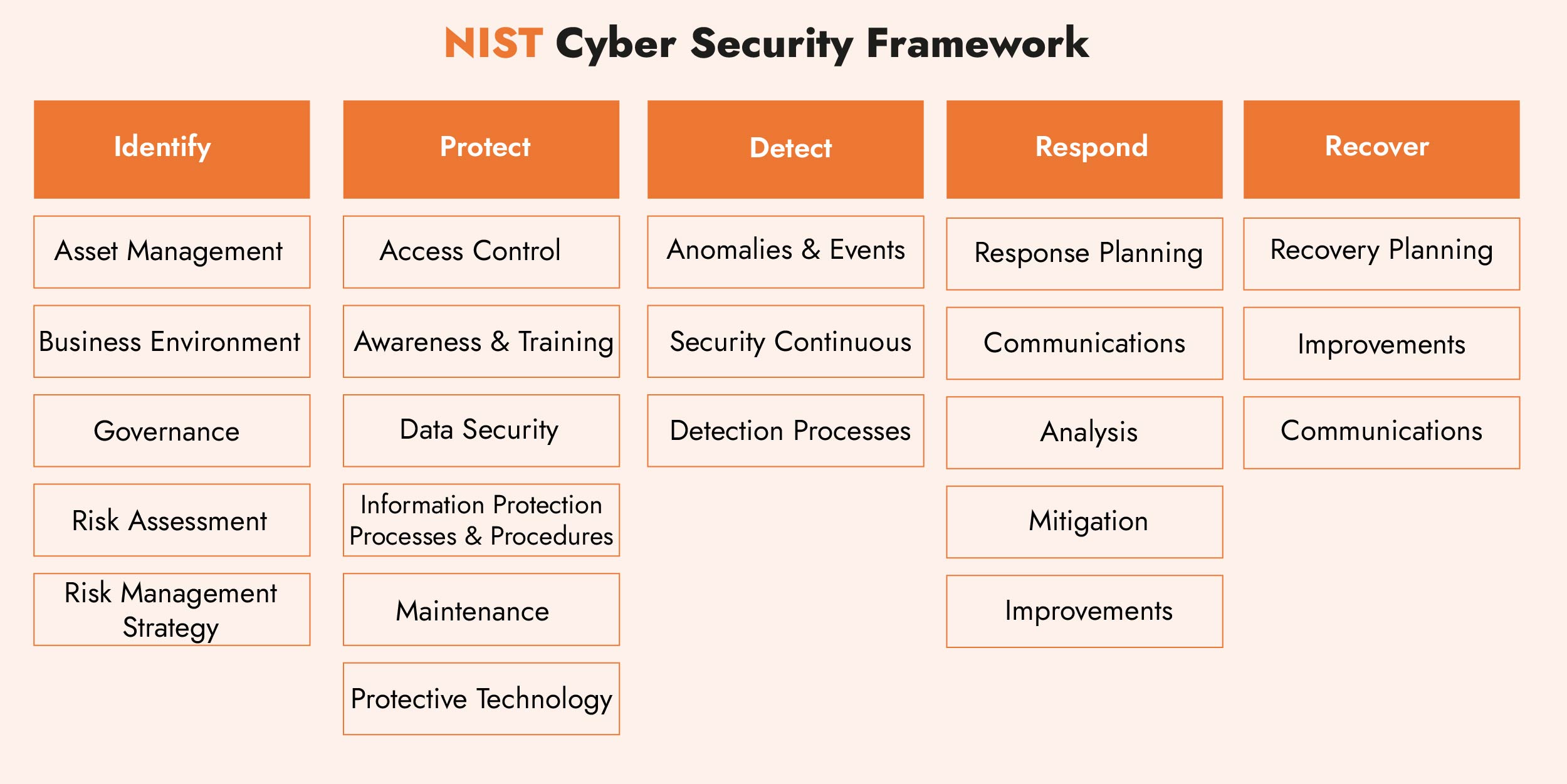
NIST Cybersecurity Framework is a set of guidelines to understand, assess, prioritize, and communicate cybersecurity risks. The framework is published by the US National Institute of Standards and Technology and is based on existing standards, frameworks, and best practices. The implementation of the framework is only required for Federal agencies. However, organizations of any size can implement the framework.
EBIOS (France)
EBIOS is an information security risk management framework developed by the French National Agency for Information Systems Security (ANSSI). EBIOS helps organizations to analyze and manage their information security risks, select appropriate security measures, and communicate their risk posture to stakeholders. EBIOS is compatible with other information security standards and best practices, and can be applied by any organization, regardless of its size or location.
IT Grundschutz (Germany)
The German Federal Office for Information Security (BSI) created IT Grundschutz, a complete method for information security management. The framework has detailed catalogs of security threats and measures, which cover technical, organizational, personnel, and infrastructure areas. It's mainly used in German-speaking countries, but it also has international impact, and it matches ISO 27001.
NCSC CAF (UK)
The National Cyber Security Centre's (NCSC) Cyber Assessment Framework (CAF) is a comprehensive framework designed by the UK government to help organizations assess and improve their cyber resilience. The framework provides a structured approach for evaluating an entity's cybersecurity posture across various domains, including risk management, asset management, supply chain security, and incident response. The CAF is particularly valuable for organizations operating in critical national infrastructure sectors, but its principles can be applied broadly.
COBIT
COBIT (Control Objectives for Information and Related Technologies) is a comprehensive IT governance and management framework developed by ISACA. It provides a set of best practices for aligning IT with business objectives, managing risks, and optimizing resources. COBIT integrates IT management practices and standards into a framework that covers areas such as strategic alignment, value delivery, resource management, risk management, and performance measurement.
FAIR Standard
The FAIR (Factor Analysis of Information Risk) standard is beneficial when combined with other cybersecurity frameworks. It provides a quantitative, data-driven approach to assessing and managing information risk. Unlike qualitative methods, FAIR breaks down risk into measurable components, focusing on the frequency of threat events and the magnitude of potential losses. By expressing risk in financial terms, FAIR helps align cybersecurity efforts with broader business objectives, making it a valuable tool for both cybersecurity professionals and executive leadership.
PCI DSS
The Payment Card Industry Data Security Standard (PCI DSS) is a set of comprehensive security requirements designed to ensure that all companies that process, store, or transmit credit card information maintain a secure environment. It was developed by major credit card companies and compliance is mandatory for all entities involved in payment card processing.
AI Frameworks and Standards
The rapid advancement of Artificial Intelligence (AI) has prompted the development of new frameworks and standards to ensure responsible and ethical AI implementation. Notable among these are the recent ISO standards for AI and the NIST AI Risk Management Framework.
ISO/IEC 42001:2023
ISO 42001 provides a comprehensive framework for establishing and maintaining an AI management system within organizations. This standard is crucial for entities developing, providing, or using AI systems, helping them to operate responsibly and meet stakeholder expectations.
ISO/IEC 23894:2023
ISO IEC 23894 offers guidance on AI-specific risk management, assisting organizations in integrating risk assessment into their AI-related activities.
The NIST AI Risk Management Framework (AI RMF 1.0)
NIST AI RMF provides a comprehensive approach to identifying, assessing, and mitigating risks associated with AI systems. These frameworks collectively represent a significant step towards standardizing AI governance, ensuring that as AI technology evolves, it does so within a structured, ethical, and risk-aware environment.
Beyond compliance: benefits of implementing cybersecurity frameworks
While implementing cybersecurity frameworks and standards helps organizations meet their legal and regulatory obligations, their true value extends far beyond mere compliance. These guidelines serve as comprehensive roadmaps for enhancing an organization's overall security posture and operational efficiency.
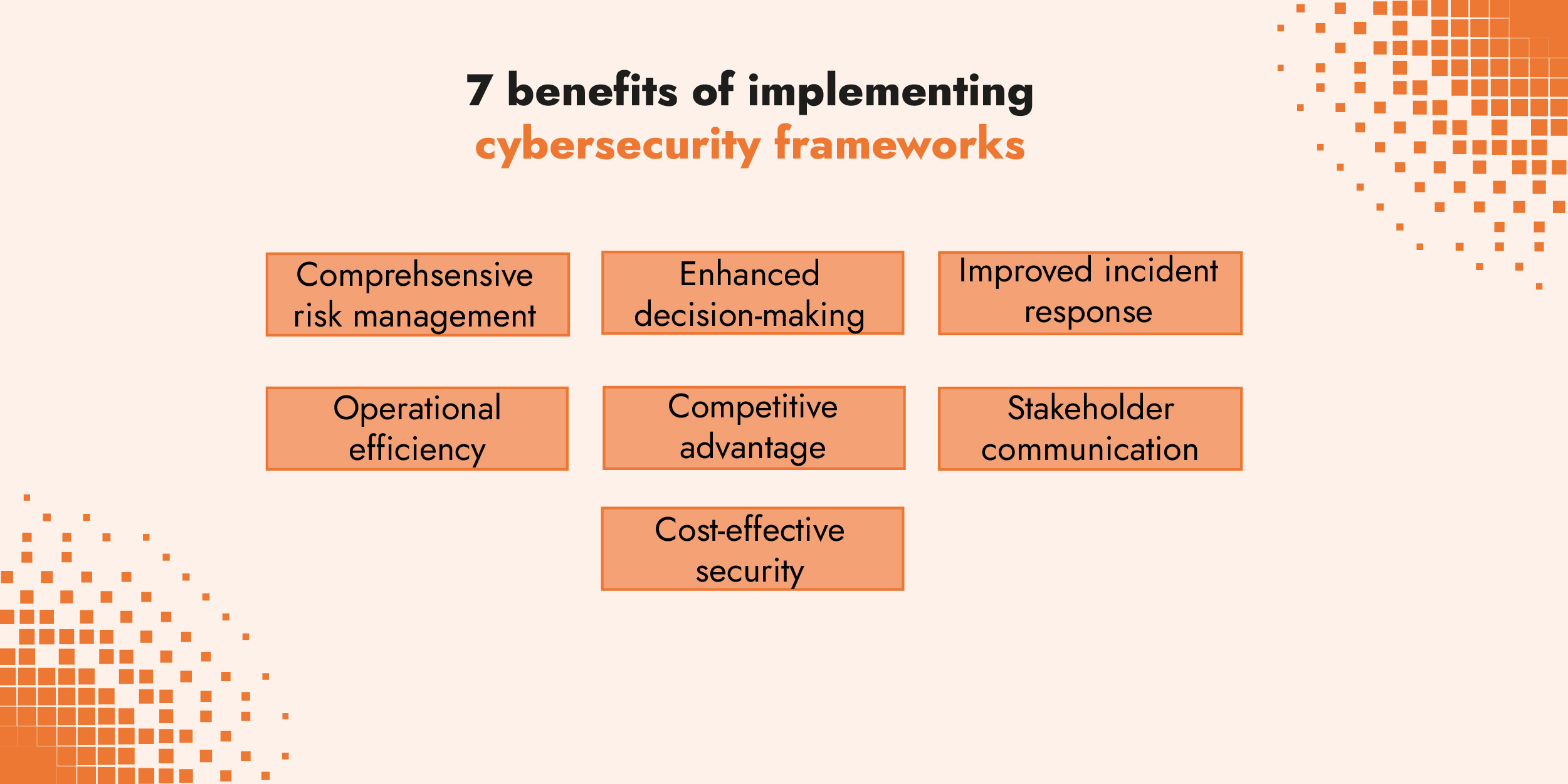
Implementing a cybersecurity framework offers numerous benefits:
Comprehensive risk management
Frameworks provide a structured approach to identifying, assessing, and managing cybersecurity risks across the entire organization. This holistic view enables better prioritization of security efforts and more effective resource allocation.
Enhanced decision-making
By establishing a common language and set of metrics, frameworks facilitate more informed decision-making at all levels, from IT staff to executive leadership. This shared understanding helps align security strategies with business objectives.
Improved incident response
Many frameworks include guidelines for incident response planning and execution. This preparation enables organizations to react more swiftly and effectively to security breaches, potentially minimizing damage and recovery time.
Operational efficiency
Adopting a standardized framework can streamline security processes, reduce redundancies, and improve overall operational efficiency. This standardization often leads to cost savings and better resource utilization.
Competitive advantage
Robust cybersecurity practices can differentiate an organization in the market. Demonstrating strong security measures can increase customer trust, potentially leading to new business opportunities and partnerships.
Stakeholder communication
Frameworks provide a common reference point for discussing security matters with various stakeholders, including board members, partners, and customers. This shared language facilitates clearer communication and understanding of security issues.
Cost-effective security
Cybersecurity standards and frameworks guide investments towards risk-based and data-driven strategies, potentially reducing overall security spending while improving outcomes.
It's important to note that simply checking off compliance boxes doesn't necessarily improve the resilience of an IT security program. The real value of cybersecurity frameworks is their implementation and integration into the organization's culture and processes. When properly adopted, these frameworks help organizations better understand their risk landscape, build resilience against cyber threats, and make more informed security decisions.
By adopting these frameworks, organizations can develop a more secure, defensible and resilient cybersecurity strategy that goes beyond compliance.
Protect your business and support data-driven decisions with a risk-based approach to your cyber strategy. Contact us today to learn how we can help you safeguard your digital assets and stay compliant with regulators.
Related articles
Read more on cyber risk, ransomware attacks, regulatory compliance and cybersecurity.
.svg)

