Risk-Based Cybersecurity Compliance Assessments
Cybersecurity compliance assessments are often treated as an audit requirement rather than a source of insight. In a regulatory environment that increasingly expects risk-based decision-making, gap analysis can play a much more strategic role. This article looks at how compliance assessments can be used to understand material risk, prioritize remediation, and support defensible regulatory reporting.
- Regulatory compliance audits should reflect the risk-based expectations of NIS2, DORA and the SEC
- Risk-based compliance and gap assessments connect regulatory findings to business impact
- Quantitative methods such as FAIR support materiality assessments and regulatory disclosures
- Data-driven compliance assessments enable defensible prioritization and consistent regulatory reporting across audits and business units
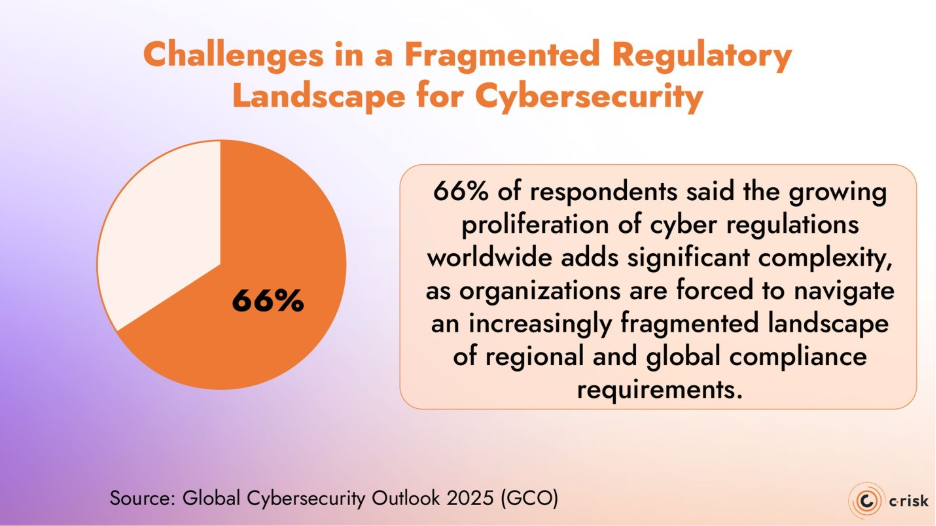
Challenges in a Fragmented Regulatory Landscape for Cybersecurity
The Global Cybersecurity Outlook 2025 (GCO) from the World Economic Forum underscores how the cyber landscape is becoming increasingly complex for organizations worldwide. Rapid technological change, geopolitical tensions and interconnected supply chains are compounding challenges. However, it’s the proliferation of fragmented cyber regulations that is a major driver of this complexity, forcing businesses to juggle diverse regional and global compliance requirements on top of evolving risk threats.
According to the GCO, 66% of respondents said the growing proliferation of cyber regulations worldwide adds significant complexity, as organizations are forced to navigate an increasingly fragmented landscape of regional and global compliance requirements.
The Traditional Compliance Assessment
A compliance audit is an independent review of an organization’s controls, activities, and supporting evidence to determine whether it meets applicable internal policies, industry standards, and regulatory requirements. In the context of cybersecurity, the audit answers a narrow but essential question: are we meeting the formal requirements of the regulations that apply to our businesses and geographies?
Audits assess whether required controls exist, whether they are operating as designed, and whether sufficient evidence is available to demonstrate compliance. When controls are missing, weak, or unsupported by documentation, regulators and supervisors may issue findings, remediation orders, or financial penalties.
Historically, cybersecurity compliance has been measured primarily through the presence of controls and documented processes. Passing an audit has become the practical threshold for demonstrating compliance: it confirms that required safeguards are formally in place. However, this provides little insight into how effective your controls are or whether any are redundant.
The Limitations of the Traditional Compliance Audits
A traditional compliance gap analysis identifies the gap between regulatory requirements and current controls. It tells you:
- Which required controls are fully, partially, or not implemented
- Where documentation or evidence does not meet compliance requirements
- Which policies and procedures must be updated to meet the standard
A traditional compliance gap analysis does not assess the gap between compliance and risk. It does not tell you:
- How much financial or operational risk is reduced by closing a specific gap
- Which gaps should be prioritized based on actual risk to the organization
- The order of remediation that will most effectively reduce overall risk
Today’s cybersecurity regulations increasingly require a risk-based approach cyber risk management, not checkbox compliance. Frameworks such as GDPR, NIS2, and DORA explicitly expect organizations to assess how their security measures reduce risk in relation to threats, assets, and operating context. This shifts the focus from an inventory of controls to understanding how effectively controls reduce your risk exposure, limit the likelihood of incidents, and mitigate business impact when an incident does occur.

The Regulatory Shift: Risk-Based Expectations
Today cybersecurity regulations across the globe are embedding risk-based language into their requirements. For example, NIS2 expects organizations to understand their cyber risks and apply controls that match their level of exposure. The Institute of Internal Auditors (IIA) also emphasize risk-based cybersecurity auditing to go beyond checklists and ensure robust defenses aligned with operational risk.
Best practice now encourages organizations to view compliance within a broader cybersecurity risk management lifecycle.
Compliance Audits Become Risk-Based Assessments
Viewing compliance within a broader cybersecurity risk management lifecycle changes how it is approached. A risk-based model still verifies whether required controls exist and operate as intended. However, the objective is to inform deeper questions: How do these controls affect my organization’s overall cyber risk exposure? And what are the gaps? This enables organizations to move from “Are we compliant?” to “Are we managing the risks that matter most?”
This shift is particularly important as cybersecurity regulations increasingly emphasize a risk-based approach to resilience, governance, and accountability at all levels of an organization including and the board. Not even the regulators are looking for checkbox compliance.
Considering Materiality with Compliance Assessments
A key development in the regulatory landscape was the reporting of the materiality of cyber incidents. The SEC published new rules in July 2023 requiring listed companies to report material incidents, including cyber, within four business days. SEC Chair Gary Gensler said in a statement about the new rules, “Whether a company loses a factory in a fire — or millions of files in a cybersecurity incident — it may be material to investors.”
Traditional audits don’t necessarily provide a quantifiable assessment of the materiality of a risk. Risk-based compliance assessments using the FAIR methodology, by contrast, evaluate findings through a financial lens. This allows you to answer the question: How much does that risk cost?
- Does the gap affect critical assets, services, or business processes?
- Could it reasonably lead to a material operational disruption, regulatory breach, or financial loss?
- Would the resulting impact require executive escalation or regulatory disclosure?
This approach allows organizations to quickly submit a current report or 8-K to the SEC if an incident is material. It also provides data-driven insights into which remediation efforts or controls will reduce the material exposure to the business.
From Gap Assesessments to Risk Insight
Traditional compliance gap analysis identifies where regulatory requirements are not fully met. It confirms whether controls are missing, partially implemented, or insufficiently documented. What it does not explain is whether those gaps meaningfully increase cyber risk, or how they should be prioritized relative to one another.
A risk-based gap analysis reframes the exercise. Instead of treating all gaps as equal findings, it evaluates them in context based on the threats they enable, the assets they affect, and the potential business impact if they are exploited. This is where compliance assessments begin to move beyond remediation tracking and support decision-making.
Evaluating Compliance Gaps Using FAIR Principles
Using FAIR principles, compliance gaps are assessed against quantified risk scenarios rather than subjective ratings or maturity scores. This approach separates facts from assumptions and makes uncertainty explicit, reducing individual bias in how findings are interpreted and ranked.
Each gap is evaluated based on:
- The likelihood of a relevant threat scenario occurring
- The effectiveness of existing controls despite the identified gap
- The potential financial and operational impact if the scenario materializes
By applying the same analytical structure across regulations, business units, and assessment cycles, organizations gain a consistent view of how compliance gaps translate into risk exposure. This enables meaningful comparison between findings and supports defensible prioritization.
Illustrative Example: Supporting Defensible Regulatory Reporting
A regulated organization identifies several compliance gaps during a cybersecurity audit.
Rather than assigning qualitative ratings of high, medium or low, the organization evaluates each gap using FAIR-based risk scenarios. Assumptions about threat frequency, loss magnitude, and control effectiveness are documented and applied consistently.
When reporting to regulators, the organization can clearly show how each gap was assessed, the estimated range of potential loss associated with it, and why certain remediation actions were prioritized based on comparative risk reduction. The discussion shifts from justifying individual findings to explaining data-driven decisions grounded in transparent, repeatable risk-based analysis.
Compliance reporting using FAIR principles aligns with the risk-based regulatory expectations from NIS2, DORA and the SEC.
Turning Compliance into a Strategic Advantage
As cybersecurity regulations continue to expand in scope and accountability, organizations that rely solely on checklist-based audits will struggle to keep pace. In contrast, those that integrate compliance assessments into a data-driven risk management program can scale more effectively, defend decisions more clearly, and focus investment where it delivers the greatest impact.
By connecting regulatory requirements to risk, materiality, and business outcomes, compliance audits become a powerful lever for improving resilience — not just passing inspections.
How C-Risk Supports Risk-Based Compliance Assessments
C-Risk works with organizations that perform compliance assessments but need to extract more value from the effort. Our focus is on turning compliance findings into decision-relevant insights by grounding them in how the business actually operates — across value chains, services, and critical processes.
We support security, risk, and compliance teams by helping them:
- Anchor compliance requirements to business value chains and critical services
- Implement quantitative risk tools that ingest compliance data for reporting
- Integrate third-party risk into compliance and risk assessments
- Prioritize remediation based on measurable risk reduction
- Build internal capability through in-person training and e-learning modules
C-Risk helps you move from checklist-driven compliance to risk-based decisions grounded in how your business actually operates.